


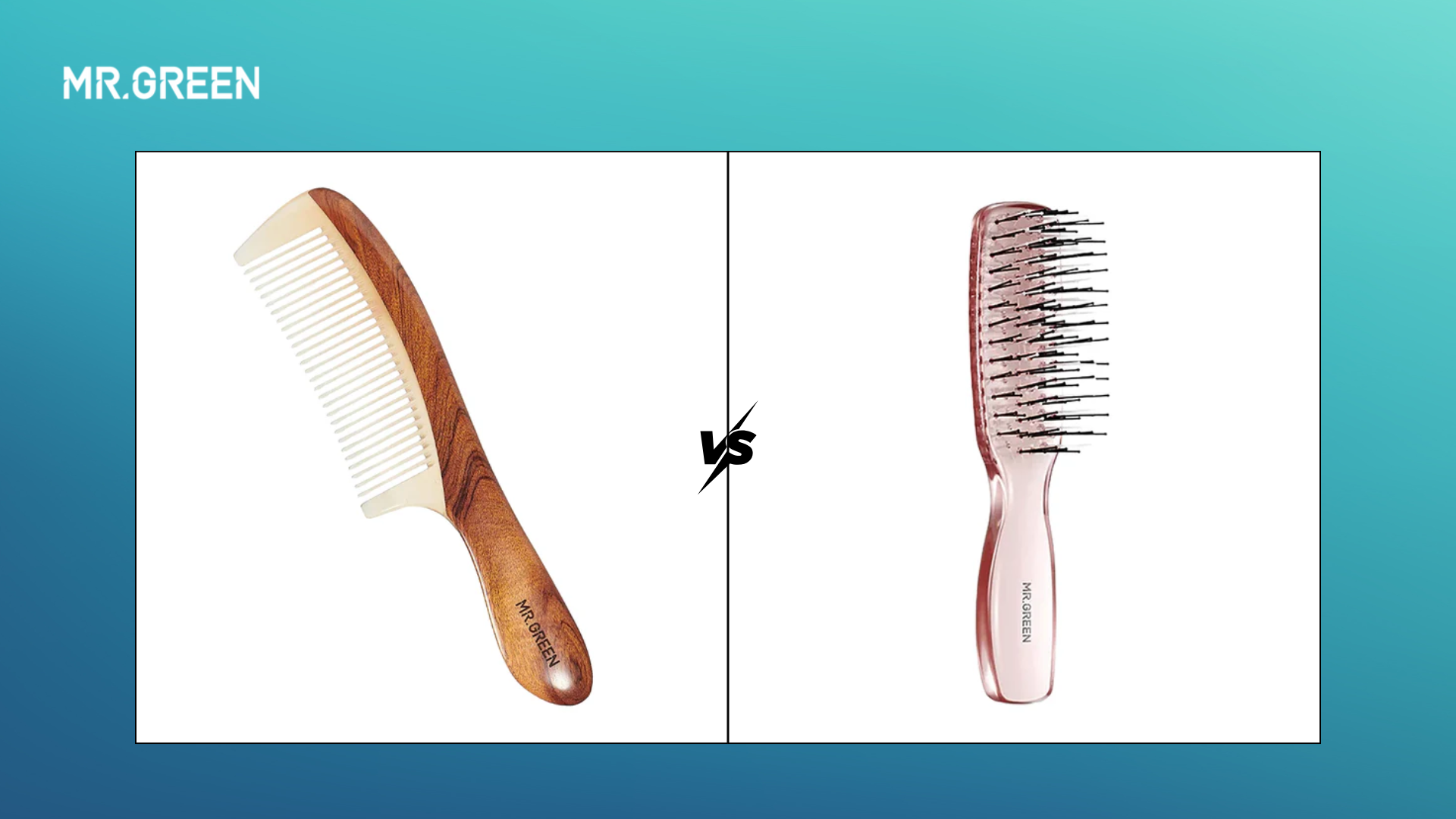
Hair problems rarely start with shampoo. Most begin with daily handling, the way we detangle, smooth, and style hair every morning.
Some people brush aggressively, some comb only when going out, and some switch tools randomly.
Then come complaints: hair fall, frizz, uneven texture, and scalp irritation.
The real question is simple: Are you using the right tool for your hair type?
In this guide, you will clearly understand the difference between a hair comb and a best hair brush, when to use each, and how to match them with your hair texture.
The Real Difference Between Comb and Brush
|
Feature |
Comb |
Brush |
|
Teeth |
Single row |
Multiple bristles |
|
Best use |
Detangling |
Styling & smoothing |
|
Wet hair |
Safe |
Risky if used harshly |
|
Oil distribution |
Limited |
Excellent |
|
Frizz control |
Moderate |
Strong |
→ A comb separates strands.
→ A brush shapes the hair.
That is why people with knots should start with a comb, not a brush.
Understanding Hair Structure: Why Does the Tool Choice Matters?
Hair has three layers:
• Cuticle (outer protective layer)
• Cortex (strength and elasticity)
• Medulla (core)
When hair is wet, the cuticle opens and becomes weak. Pulling with a brush stretches the strand beyond its elastic limit. A wide-tooth curly hair comb glides through instead of pulling.
Dermatology studies show mechanical damage is a leading cause of everyday hair breakage. The tool matters more than most people think.
When You Should Use a Comb?

A comb is primarily a detangling tool.
Use a comb when:
→ Hair is wet
→ Hair is curly
→ Hair is fragile
→ You applied conditioner
→ You want minimal breakage
A smooth brush comb hair action begins with detangling first. Skipping this step and directly brushing causes snapping.
Best comb uses
→ After shower
→ Applying oil
→ Sectioning hair
→ Managing curls
People with waves or curls benefit greatly from a curly hair comb because curls stay defined instead of puffed.
When You Should Use a Brush
A brush is a finishing tool.
Use a brush when:
→ Hair is dry
→ Styling
→ Smoothing flyaways
→ Distributing scalp oils
A curly hair brush should be used gently and only after detangling. Brushing tangled curls creates frizz.
The hair straightening brush is especially useful for quick daily grooming because it aligns strands while maintaining volume.
A soft-bristle clear hair brush is recommended for thin hair since it massages the scalp without pulling roots.
Matching Tool With Hair Type
1. Straight Hair
• Best option: soft bristle brush
• Reason: spreads natural scalp oils from root to tip.
2. Wavy Hair
• Best option: detangle with comb, finish with brush.
3. Curly Hair
• Best option: comb only when wet.
• Avoid dry brushing.
4. Thick Hair
• Use a wide-tooth comb + firm brush combination.
Why Over-Brushing Causes Hair Fall?
People often brush repeatedly thinking it improves growth. Excess brushing:
→ Weakens roots
→ Removes protective oil
→ Irritates scalp
Hair fall here is mechanical, not hormonal.
Hair Care Routine
Morning
1. Detangle lightly with comb
2. Brush gently to smooth
After Shower
1. Apply conditioner
2. Use wide tooth comb
3. Air dry
Before Bed
1. Light combing only
2. Avoid tight brushing
Material Also Matters
→ Plastic: Cheap but causes static.
→ Wood: Reduces frizz.
→ Natural bristles: Best oil distribution.
Quality grooming applies everywhere, whether selecting a durable nail clipper, fingernail and toenail clippers, or hair tools material determines longevity and safety.
Common Mistakes People Make

1. Brushing wet hair
2. Using same tool for all hair types
3. Pulling knots
4. Ignoring scalp cleaning
5. Sharing tools
People carefully choose the best manicure set but rarely think about hair tools, even though both involve keratin care.
How Often Should You Comb or Brush?
• Curly hair: once daily
• Straight hair: twice daily
• Thick hair: gentle detangle only
• Oily scalp: brushing helps distribute oil
Choosing a Good Tool
Look for:
→ Smooth edges
→ Flexible bristles
→ Comfortable grip
→ Anti-static material
Avoid sharp seams. They scrape hair cuticles similar to how a blunt nail cutter clipper damages nails.
Which is better: hair comb or hair brush?
A comb is best for detangling and wet hair because it reduces breakage. A brush is better for styling, smoothing, and distributing scalp oils. The correct choice depends on hair thickness, curl pattern, and scalp sensitivity.
FAQs
Q: Is a comb better than a brush for hair fall?
A: Yes, a comb is safer for detangling and reduces breakage, especially on wet hair.
Q: Should I brush hair every day?
A: Yes, but gently. Over-brushing causes damage.
Q: Which is best for curly hair?
A: A wide-tooth comb is best. Brushes create frizz.
Q: Why does my hair get frizzy after brushing?
A: The brush lifts the cuticle and creates static, especially in dry hair.
Q: Can brushing improve hair growth?
A: No. It improves oil distribution but does not increase growth rate.
Final Thoughts: Simple Change, Noticeable Difference
Hair care is not complicated. Often the improvement comes from a small correction. Using the right tool for the right purpose protects hair texture and reduces daily damage without extra products.
A comb prepares the hair. A brush finishes it.
At MR. GREEN, we notice that grooming whether nails or hair works best when it becomes a simple habit rather than a once-a-week task.
Choose the right tool, handle your hair gently, and your hair will respond naturally over time.
Healthy hair usually comes from better habits.
Aktie:
How to Choose the Best Manicure Set: Complete Buying Guide
How to Choose the Best Manicure Set: Complete Buying Guide